





 EMERGING TECH
EMERGING TECH
EMERGING TECH
EMERGING TECH

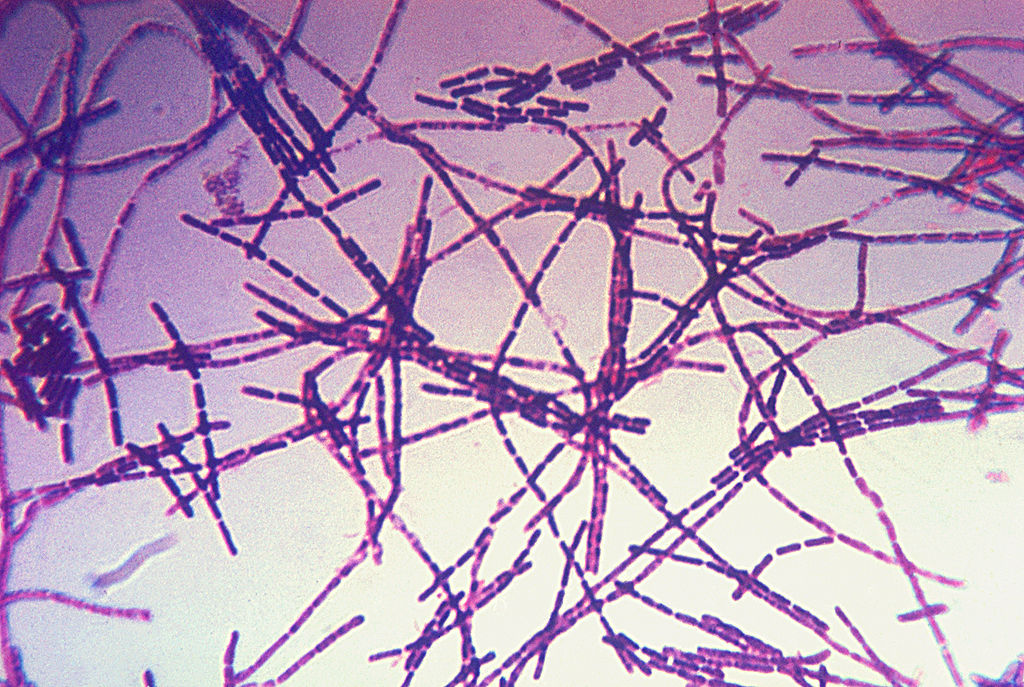
Several anthrax attacks in the early 2000s left the public terrified of unidentified white powders, but unfortunately, recognizing anthrax requires both expert knowledge and time. A team of scientists from the Korea Advanced Institute of Science and Technology may have found a solution to this problem using artificial intelligence, which they say can save valuable time by spotting anthrax faster than a human could.
Anthrax is a life-threatening infection caused by the bacteria Bacillus anthracis, which can commonly be found in livestock. Both the U.S. and the U.S.S.R. created weaponized versions of anthrax during the Cold War because of the bacteria’s availability and hardiness.
Anthrax spores can survive harsh conditions for significant periods of time, making them easy to transport and deliver. According to the Centers for Disease Control and Prevention, anthrax is one of the most likely biological agents to be used in a bioterror attack.
Anthrax can be treated if caught early, but its symptoms sometimes do not appear for days or even months after exposure, which is why identifying the spores as soon as possible is critical. The research team from KAIST said that not only can its AI accurately spot anthrax, it can do so in less than one second.
The team published a paper in the journal Science Advances explaining how they created the AI by combining deep learning and computer vision with an extremely powerful microscope that creates three-dimensional scans of microbes. They trained the AI specifically to recognize different trains of the anthracis bacteria, but they hope that the same deep learning method can also be applied to other microbes.
Although the AI showed promising results, it was still not quite perfect. When tasked with identifying the anthracis bacteria, the AI could do so with roughly 96 percent accuracy, which the team called “a remarkable accuracy.” As a test, they also tried to train the same AI to spot listeria, which it managed to do with 85 percent accuracy. The team considered this accuracy “surprisingly high,” considering the AI was not originally designed for this purpose.
In their paper, the research team say that their deep-learning method could mark a major step forward in fighting dangerous pathogens.
Support our mission to keep content open and free by engaging with theCUBE community. Join theCUBE’s Alumni Trust Network, where technology leaders connect, share intelligence and create opportunities.
Founded by tech visionaries John Furrier and Dave Vellante, SiliconANGLE Media has built a dynamic ecosystem of industry-leading digital media brands that reach 15+ million elite tech professionals. Our new proprietary theCUBE AI Video Cloud is breaking ground in audience interaction, leveraging theCUBEai.com neural network to help technology companies make data-driven decisions and stay at the forefront of industry conversations.